Xurain · Daily Wonder

The Curiosity Jar

One small wonder from the world of moss, tiny plants and sealed glass ecosystems — served fresh, and always linked back to a full guide. Curiosity in, greener terrariums out.

Dubia roaches feeder

Aug 30, 2026

Dubia roaches can't climb glass or fly — the perfect feeder

Unlike crickets, dubia can't scale smooth walls or take flight, so they can't hide in the tank and chirp all night. Drop them in a bowl and they stay put until eaten.

Ties to: Feeder Insects Guide

Day-night cycle timer

Aug 29, 2026

Night geckos still need a sunrise — just not a bright one

Nocturnal species skip UVB but still rely on a steady day-night cycle to stay healthy. A simple timer and smart plug give them that rhythm without a blazing lamp.

Ties to: Terrarium Light Timer & Smart Plug Guide

Pothos roots as living filter

Aug 28, 2026

Pothos roots quietly scrub your tank's waste water

Fast-growing plants like pothos and ferns pull nitrogen waste out of the substrate, acting as a natural filter. Let them root into the drainage layer and they clean as they climb.

Ties to: Best Plants for a Bioactive Terrarium

Floor space vs tank gallons

Aug 27, 2026

Gallons lie — floor space is what ground dwellers need

A tall tank wastes space on a terrestrial gecko, while an arboreal species needs the height instead. Pick the footprint the animal actually uses, not the biggest number.

Ties to: Choosing Terrarium Size

Chameleon changing color

Aug 26, 2026

Chameleons change colour to talk, not to hide

Their colour shifts mostly broadcast temperature and emotion — calm, stressed, warm or cold — far more than camouflage. A dark chameleon is often just cold, not blending in.

Ties to: Chameleon Care for Beginners

Springtails as bio-indicator

Aug 25, 2026

Your springtails are a humidity meter with legs

A thriving springtail bloom means moisture is dialled in; if they suddenly vanish the tank has swung too dry or too wet. Watch the crew and you can read the climate.

Ties to: Isopods & Springtails: The Clean-Up Crew

Moss absorbing through leaves

Aug 24, 2026

Moss drinks through its leaves, not its roots

Moss has no true roots — it absorbs water and nutrients across its whole surface. That is exactly why it can carpet bare glass, stone and driftwood where nothing else will.

Ties to: Best Moss for Terrariums

Reptile shedding in one piece

Aug 23, 2026

Right humidity, and a snake peels off in a single sock

With correct moisture many reptiles shed their whole skin in one intact piece. Stuck, patchy shed almost always means the air is too dry — a humid hide fixes it overnight.

Ties to: Reptile Hides & Caves Guide
Screen vs glass terrarium lid

Aug 22, 2026

A screen top can halve your humidity in an hour

Mesh lets moisture pour out; glass holds it in. Choosing the wrong top is the fastest way to lose the humidity a tropical tank depends on — match the lid to the animal.

Ties to: Glass vs PVC Terrarium

Frog drinking through skin

Aug 21, 2026

Frogs don't sip water — they soak it up through their skin

A patch of thin skin on a frog's belly absorbs water directly, so they never drink by mouth. That is why clean, dechlorinated water and a shallow dish matter so much.

Ties to: Dart Frog Vivarium Guide
Isopod molting in two halves

Aug 20, 2026

A two-tone isopod isn't sick — it's mid-costume-change

Isopods moult in two stages: the back half sheds first, then the front a day later. Catch one looking half-pale and it is simply growing, not dying.

Ties to: Isopods & Springtails: The Clean-Up Crew

Horticultural charcoal for terrarium

Aug 19, 2026

A pinch of charcoal keeps a sealed jar from going sour

Horticultural charcoal adsorbs odours, tannins and toxins that build up in a closed system. It is the quiet reason a well-built sealed terrarium can stay fresh for months.

Ties to: Terrarium Soil Recipe Guide

Leopard gecko bone health

Aug 18, 2026

A gecko will dissolve its own skeleton to survive

Without calcium and UVB, reptiles pull minerals straight from their bones, leading to metabolic bone disease. Dusted feeders and the right lighting quietly prevent it.

Ties to: Leopard Gecko Enclosure Guide
Mycorrhizal fungi network

Aug 17, 2026

Plants trade food through an underground internet

Mycorrhizal fungi wrap around plant roots and swap minerals for sugar, linking every plant in a bioactive tank into one shared network. New cuttings tap in and establish far faster.

Ties to: Bioactive Terrarium 101

A place to vanish

Aug 16, 2026

A reptile without a hide is a stressed reptile
Even a bold-looking lizard needs somewhere to disappear — a snug cave lowers stress, improves appetite and helps shedding. Two hides, one warm and one cool, let it thermoregulate without feeling exposed.

Ties to: Reptile Hides & Caves Guide

Runs itself

Aug 15, 2026

A bioactive terrarium is a tiny planet that maintains itself
Plants, microbes and clean-up crew form a loop: waste feeds microbes, microbes feed plants, plants shelter the crew. Build it right and you feed the animals — the tank handles the rest.

Ties to: Bioactive Terrarium 101

Let it breathe

Aug 14, 2026

A terrarium that can't breathe grows mold, not plants

Stagnant, saturated air is what mold loves. A little airflow — a vent or a small fan — keeps humidity high but moving, which is the difference between a lush tank and a fuzzy grey one.

Ties to: Terrarium Ventilation Guide

Sticky feet

Aug 13, 2026

Tree frogs climb sheer glass with suction-cup toes

Each toe ends in a soft pad that grips using a thin film of mucus and surface tension — enough to hold a frog upside down on smooth glass. They walk straight up the walls of their tank.

Ties to: Tree Frog Terrarium Guide

Two kinds of wet

Aug 12, 2026

Misting and fogging do completely different jobs

Misting drops water onto leaves and soil like a quick rain that spikes humidity then fades. Fogging fills the air with a slow hanging haze that holds humidity steady — mixing both is how pros fake a rainforest.

Ties to: Misting vs Fogging

The silent guard

Aug 11, 2026

One cheap device stands between your pet and a cooked enclosure

A reptile thermostat cuts the heat the instant it overshoots. Without one a stuck heat mat can climb past safe temps in minutes — it's the single most important gadget beginners skip.

Ties to: Reptile Thermostat Buying Guide

Soil is alive

Aug 10, 2026

The right terrarium soil is a living sponge

A good bioactive substrate holds moisture like a sponge while staying airy enough for roots and microbes to breathe. Get the mix right and it quietly feeds the whole tank for years.

Ties to: Choosing Terrarium Substrate

Bark that won't rot

Aug 9, 2026

Cork bark is the one wood that survives a wet tank

Cork is harvested from living oak bark and is naturally waterproof and rot-resistant. That's why it can sit in a dripping vivarium for years while any other wood would turn to mush.

Ties to: Cork Bark Background Guide

Forever small

Aug 8, 2026

Some terrarium plants stay tiny on purpose

Certain plants are naturally terrarium-sized — they max out at a few inches no matter how long they grow. Choose these and your sealed jungle stays balanced for years without a single trim.

Ties to: Terrarium Plants That Stay Small

Cold fog

Aug 7, 2026

Terrarium fog is made by sound, not heat

An ultrasonic fogger vibrates a disc millions of times a second, flinging microscopic droplets into the air as cool mist. No boiling, no heat — just sound turning water into cloud.

Ties to: Best Terrarium Fogger

A pantry with legs

Aug 6, 2026

A leopard gecko stores months of food in its tail

That plump tail is a fat reserve — a healthy leopard gecko can live off it for weeks if food runs short. A thin, pencil-like tail is the first sign something is wrong.

Ties to: Leopard Gecko Enclosure Guide

Faster than a car

Aug 5, 2026

A chameleon's tongue accelerates faster than a sports car

A chameleon fires its tongue at over 40 g — from zero to full stretch in under a hundredth of a second. Fully extended it can be longer than the chameleon's entire body.

Ties to: Chameleon Care for Beginners

Born harmless

Aug 4, 2026

Captive dart frogs lose their poison entirely

Wild dart frogs get their toxins from eating certain ants and mites. Raised in a vivarium on fruit flies they never build the poison at all — which is exactly why these dazzling frogs are safe pets.

Ties to: Dart Frog Vivarium Guide

No eyelids

Aug 3, 2026

Crested geckos lick their own eyeballs clean

Crested geckos have no eyelids — a clear scale covers each eye, and they use their long tongue to wipe it free of dust and water. They also drink by licking droplets off leaves in the dark.

Ties to: Crested Gecko Setup Guide

A false floor

Aug 2, 2026

The secret to a terrarium that never floods is an empty basement

Under the soil sits a drainage layer of clay balls or gravel — a hidden reservoir that catches excess water so roots never sit in a swamp. Skip it and even the prettiest setup rots from the bottom up in weeks.

Ties to: Bioactive Drainage Layer Guide

Living compost

Aug 1, 2026

Your terrarium's janitors are crustaceans, not bugs

Isopods are land crustaceans — closer to shrimp than to insects. They eat decaying leaves, droppings and dead roots, turning waste into plant food so a bioactive tank never needs its floor cleaned.

Ties to: Isopods & Springtails: The Clean-Up Crew

Moss has no roots

Jul 31, 2026

Moss drinks through its leaves, not its roots

Moss has no true roots — the threads under it only anchor it in place. It absorbs water and nutrients straight through its leaf surface, which is why a light mist keeps it greener than watering the soil ever could.

Ties to: Best Moss for Terrariums

It waters itself

Jul 30, 2026

A sealed terrarium can go years without watering

Inside a closed jar water evaporates from the soil and leaves, condenses on the glass, and rains back down — the same drop cycling forever. Some sealed terrariums have thrived for 40+ years on a single pour.

Ties to: How to Build a Closed Terrarium

Clean-up crew — add these first

Jul 29, 2026

The first thing to add to a new terrarium isn't a plant

Seed springtails on day one. They colonise within days and graze mold before it can spread — so by the time everything else settles in, the ecosystem is already cleaning itself.

Ties to: Isopods & Springtails: The Clean-Up Crew

Drainage — the layer that saves it

Jul 28, 2026

One hidden layer decides whether your terrarium thrives or rots

A false-bottom drainage layer gives excess water somewhere to go, keeping roots out of a swamp. Skip it in a lidded jar and the whole build can slowly turn sour.

Ties to: Bioactive Drainage Layer Guide

Carnivorous — plants that eat insects

Jul 27, 2026

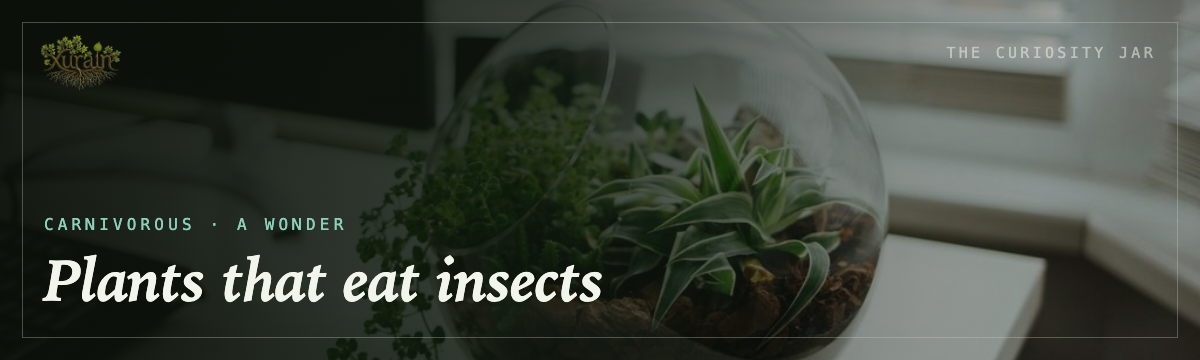
Some terrarium plants catch their own dinner

Sundews and small pitcher plants lure and trap insects for nutrients, and they love the bright, humid air under glass. A jar of carnivores is a whole tiny food chain on your shelf.

Ties to: Best Plants for a Bioactive Terrarium

Glass — why the walls sweat

Jul 26, 2026

Fog on the glass isn't a problem — it's the system working

Condensation means the water cycle is running. If it's so foggy you can't see inside, just crack the lid for an hour. Clear glass with a little morning mist is exactly what you want.

Ties to: Moss Terrarium Care: Watering, Light & Mold

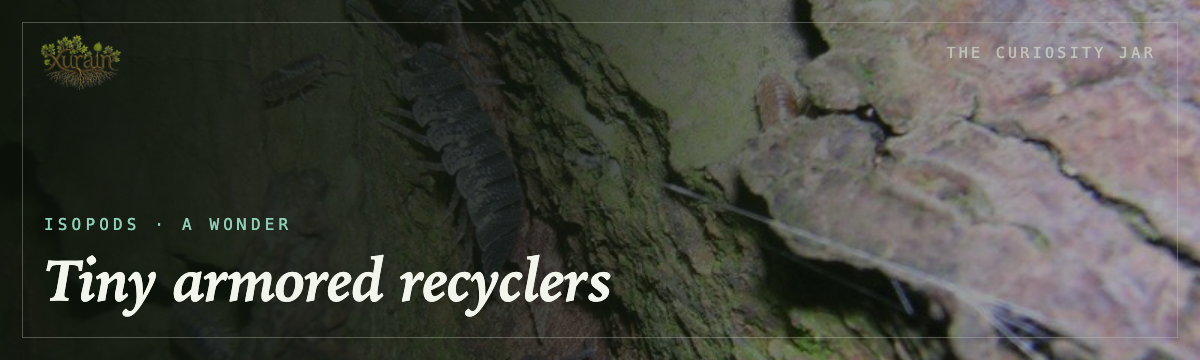
Isopods — tiny armored recyclers

Jul 25, 2026

The roly-poly in your terrarium is a crustacean, not a bug

Isopods are land crustaceans — closer to crabs than beetles. In a bioactive setup they shred fallen leaves and waste into food for your plants: a clean-up crew that happens to wear armor.

Ties to: Isopods & Springtails: The Clean-Up Crew

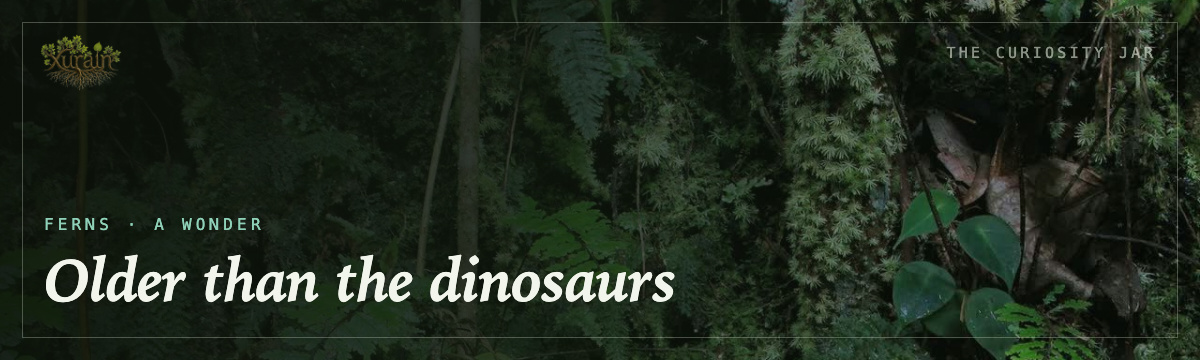
Ferns — older than the dinosaurs

Jul 24, 2026

Ferns were thriving 200 million years before the first dinosaur

Ferns go back roughly 360 million years. They evolved for damp, shaded forest floors — which is exactly why they settle so happily into the humid, low-light world of a terrarium.

Ties to: Best Plants for a Bioactive Terrarium

Humidity — glass makes its own rain

Jul 23, 2026

A sealed terrarium waters itself for months on end

Sun warms the jar, moisture rises off the leaves and soil, condenses on the cool glass and rains back down. A closed terrarium runs its own tiny water cycle — you might add water only once a season.

Ties to: How to Build a Closed Terrarium

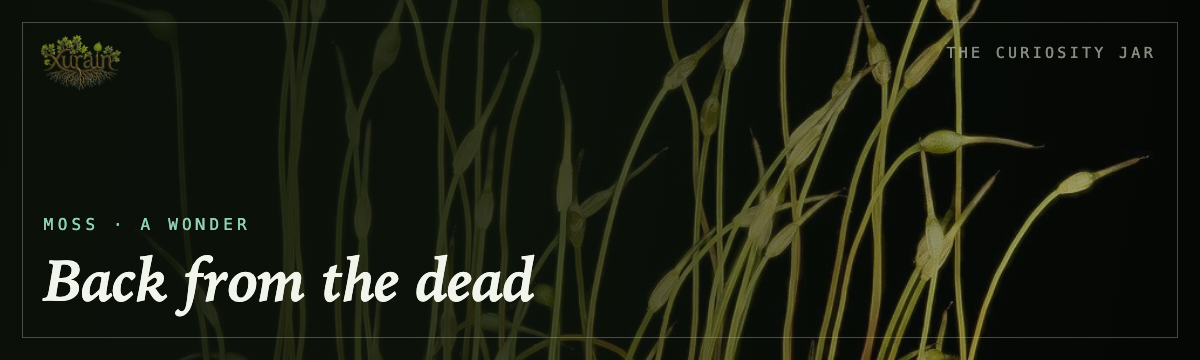
Moss — back from the dead

Jul 22, 2026

This moss can come back from the dead after years of drought

Many mosses lose 90%+ of their water, turn brown and shut life down completely. Add water and they green up within seconds — even after years dormant. They don't die; they pause.

Ties to: Moss Terrarium Care: Watering, Light & Mold

Origins — it began by accident

Jul 21, 2026

The terrarium was invented by accident, in a jar someone forgot about

London, 1829: Dr. Nathaniel Ward sealed a moth chrysalis in a glass jar with soil. A fern sprouted and thrived for months with no watering. The "Wardian case" was born — and changed how plants crossed oceans.

Ties to: How to Build a Closed Terrarium

Soil — a universe in a spoonful

Jul 20, 2026

One teaspoon of healthy soil holds more life than there are people on Earth

Up to a billion bacteria, plus fungi, protozoa and nematodes — in a single spoonful. That invisible crew is exactly what keeps a bioactive terrarium clean without you lifting a finger.

Ties to: Terrarium Soil Recipe Guide

Moss — no roots, still thriving

Jul 19, 2026

Moss has no roots — it drinks straight through its leaves

Those thread-like rhizoids only anchor moss; they don't feed it. Water and nutrients absorb directly across the leaf surface. That's why moss grows on glass, stone and bark with no soil at all.

Ties to: Best Moss for Terrariums

Micro-life — nearly impossible to kill

Jul 18, 2026

Near-indestructible "water bears" live in the moss on your street

Tardigrades survive boiling, freezing, radiation and the vacuum of space — and they live in damp moss and lichen. Put a pinch of wet moss under a cheap microscope and you'll probably meet one.

Ties to: Bioactive Terrarium 101

Sealed worlds — sealed for over 60 years

Jul 17, 2026

This bottle garden has been sealed shut since 1960 — and it's still alive

David Latimer planted a spiderwort in a glass bottle in 1960, watered it once in 1972, then closed it for good. Decades on it thrives — a whole ecosystem recycling its own water, air and nutrients.

Ties to: Best Containers for a Moss Terrarium

Plants — the fastest plant alive

Jul 16, 2026

The fastest move in the plant kingdom takes 1/1000th of a second

The bladderwort, a tiny carnivorous plant, snaps its underwater trap shut on prey in under a millisecond — among the fastest movements known in plants. Some species are small enough to live in a terrarium.

Ties to: Best Plants for a Bioactive Terrarium

Preserved — alive? look again

Jul 15, 2026

Preserved moss looks alive forever — but it will never grow again

Preserved moss is real moss treated with glycerin so it stays soft and green for years. It's beautiful, zero-upkeep decor — but it's not alive, and sealing it in a humid terrarium just makes it rot.

Ties to: Live vs Preserved Moss for Terrariums

Clean-up crew — the invisible cleaners

Jul 14, 2026

Tiny springtails are the invisible janitors that keep a terrarium from molding

A pinch of springtails and isopods eat mold, fallen leaves and waste before it can rot. They're why a well-built bioactive terrarium cleans itself — a living clean-up crew smaller than a grain of rice.

Ties to: Isopods & Springtails: The Clean-Up Crew

Light — the sun is the enemy

Jul 13, 2026

Moss hates direct sun — a bright, shady windowsill grows it best

In the wild moss lives on forest floors and shaded stone. Direct sun overheats a sealed jar and scorches moss brown. Bright, indirect light is the sweet spot — no grow-lamp required.

Ties to: Moss Terrarium Care: Watering, Light & Mold

New wonder added regularly. Every entry stays in the moss, tiny-plant and sealed-ecosystem world — and always points you to a full guide to actually build it.